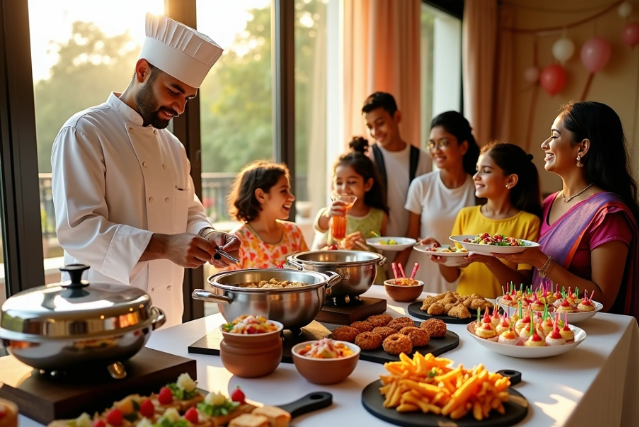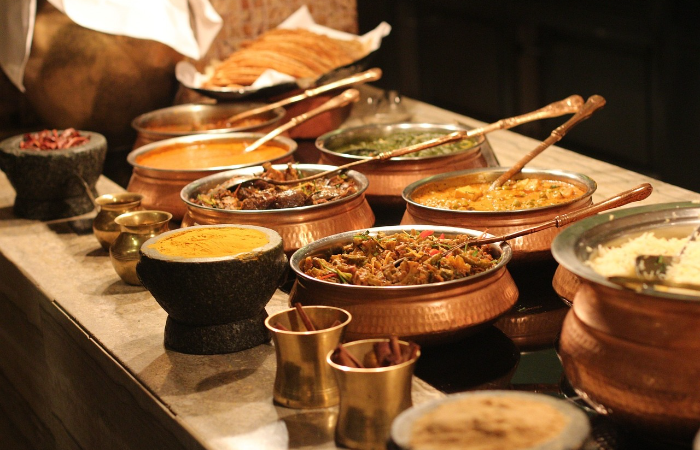
Wedding catering planning in Bangalore involves more than just choosing dishes. The average wedding budget in the city is around Rs 32 lakh, yet Bangalore weddings host 30% more guests than the national average. Food is one of the most memorable parts of any wedding. A single catering problem can affect the whole event as a result. Food running out disappoints guests and long queues create frustration while late service disrupts the schedule.
You might be organising Bangalore reception food, planning multi-day celebrations, or coordinating wedding catering in Bangalore for 500+ guests. This piece walks you through every step. You’ll learn how to plan a flawless Bangalore wedding that keeps your guests happy. We cover understanding catering costs (which range from ₹500 to ₹3000 per plate) to managing day-of execution.
Step 1: Understanding Wedding Catering Options in Bangalore
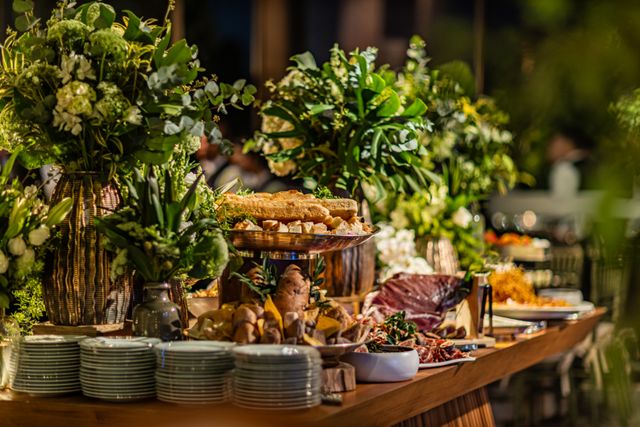
Bangalore offers distinct catering formats that shape how your guests experience food at your wedding. Each format serves different needs, from honouring cultural traditions to creating interactive dining experiences.
Traditional South Indian Wedding Meals
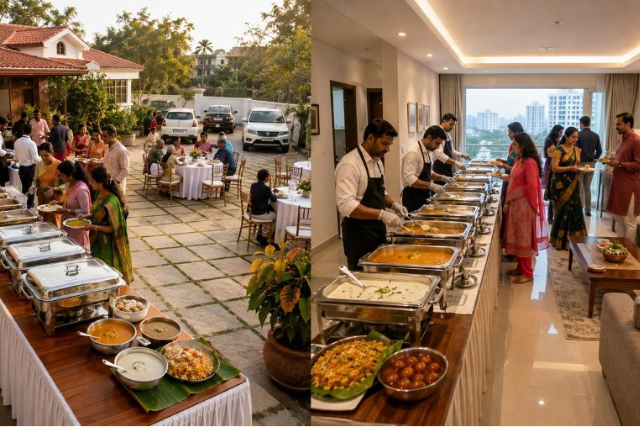
Banana leaf service forms the centre of traditional South Indian wedding meals, where dishes arrive in a specific ceremonial order. Rice preparations, paruppu with ghee, sambar, rasam, poriyal, kootu, avial, pachadi, pickle, papad, curd, and payasam make up the meal. Regional variations matter when you plan wedding catering in Bangalore. Tamil weddings expect Vatha Kuzhambu and Kootu. Kerala celebrations require Olan, Avial, Erissery, and Palada Pradhaman. Chettinad Chicken Curry and Meen Kozhambu bring authentic regional flavours to non-vegetarian menus.
Buffet-Style Catering Services
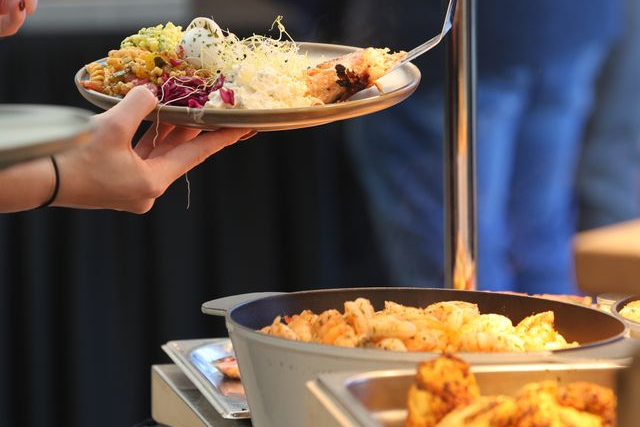
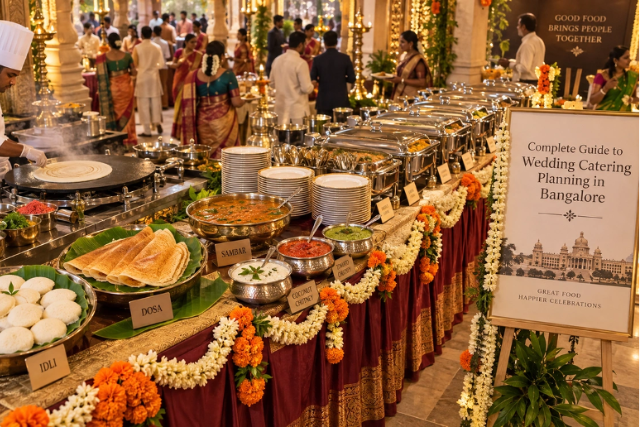
Buffet catering provides flexibility for guests to choose portion sizes and avoid unwanted dishes. Large gatherings benefit from this format especially, as it accommodates diverse dietary needs without isolating anyone from the main dining setup. Themed décor and strategic placement can feature in buffet counters to reduce queues during peak dinner service. Guests move around and interact rather than remaining seated at fixed tables, and the format encourages socialisation naturally.
Live Food Counters and Interactive Stations
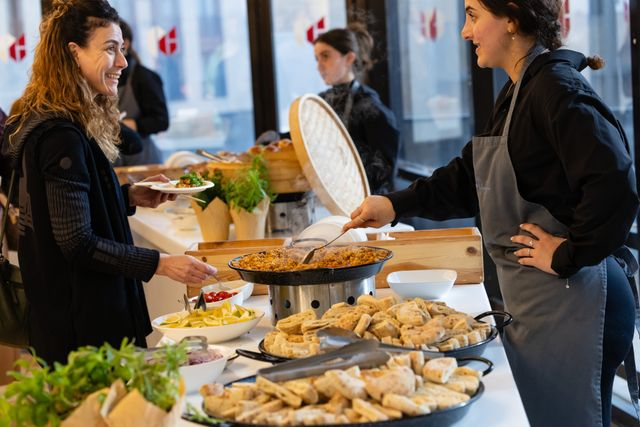
Live food stations cook dishes for each guest at that moment and address the biggest problem of stale banquet food. Fresh dosa, appam with stew, and philtre coffee stations create dishes that taste best right after preparation. Guests gather at these counters, comment on food, and interact with chefs preparing dishes in front of them. Chaat counters, pasta stations, tandoor grills, and live dessert preparations like jalebi with rabri are popular options.
Multi-Cuisine Wedding Catering
Multi-cuisine menus work best when you follow the 70-30 rule: 70% comfort food that everyone recognises, paired with 30% exotic dishes that add surprise. Menu fatigue occurs when couples attempt too many cuisines without planning flavour compatibility. North-South blends featuring Kerala Parotta with Beef Roast alongside Butter Naan with Paneer Butter Masala make successful combinations. Live food stations help prevent aroma cross-contamination by spacing different cuisines and creating a food court atmosphere.
Reception Food and Welcome Drinks
Welcome drinks set the tone during the first ten minutes as guests arrive and fill the natural lull whilst everyone gathers. Signature cocktails or mocktail bars styled with the couple’s names often appear in Bangalore reception food for evening events. Options range from traditional beverages like Pimm’s and self-serve prosecco bars to non-alcoholic choices that ensure every guest feels included. Your guests’ atmosphere gets established by the drink in their hand before the ceremony begins.
Step 2: Setting Your Catering Budget and Guest Count

Guest count determines far more than food quantity when you plan wedding catering in Bangalore. Catering operations expand in staffing coordination, food preparation volume, transportation logistics, equipment requirements and venue movement as attendance increases. An event serving 50 guests operates very differently from one serving 500 attendees. Even small operational delays affect large numbers of guests at the same time at bigger gatherings, which explains why large event catering requires much more operational planning.
How Guest Count Affects Your Catering Plan?
Larger guest counts just need more from venue infrastructure and operational flow. Venues require larger prep areas, expanded seating layouts, additional service routes and increased transportation access as attendance grows. Staffing needs grow in proportion, with kitchen teams, service staff, bartenders, buffet attendants and setup crews all scaling up. Food preparation at large events becomes a coordinated production system with expanded kitchen operations, larger prep schedules, transportation timing and synchronised service planning.
Wedding Catering Cost Breakdown in Bangalore
Wedding catering in Bangalore costs Rs 500 to Rs 1,800 per plate. Most couples spend Rs 1,200 to Rs 2,000 per guest for multi-cuisine menus. For a 300-guest wedding at Rs 2,000 per plate, single-event cost reaches Rs 6 lakh. Non-vegetarian options increase costs by Rs 300 to Rs 800 per plate because of ingredient prices and handling requirements. Catering makes up 25 to 35 percent of total wedding spend when venue and catering are separate.
What to Include in Your Catering Quotation?
Your quotation must specify event details including date, time, location, guest count and dietary requirements. The biggest problem involves guest count fluctuations. Your contract should state guaranteed pax with clear billing terms: food prepared for a 10 percent buffer above the guaranteed count, with excess plates billed at 1.2x the standard rate. Food catering services in India attract 5 percent GST, so specify whether rates include this or if GST adds to the final bill. Clarify what the base price covers, including waiters, cleaners, kitchen setup, gas cylinders, transport, table linen and mineral water.
Budget Planning for Multi-Day Wedding Events
Indian weddings feature four catered events: Mehendi, Sangeet, Wedding and Reception. Caterers offer 10 to 20 percent discounts on four-event packages versus independent bookings. Guest attendance varies per event. Mehendi draws 50 to 60 percent of the wedding-day count and Sangeet draws 70 to 80 percent, whilst wedding and reception see full attendance. For a 300-guest celebration, expect Mehendi at 165 guests, Sangeet at 225 and full attendance for the remaining events.
Step 3: Choosing the Right Caterer for Your Wedding
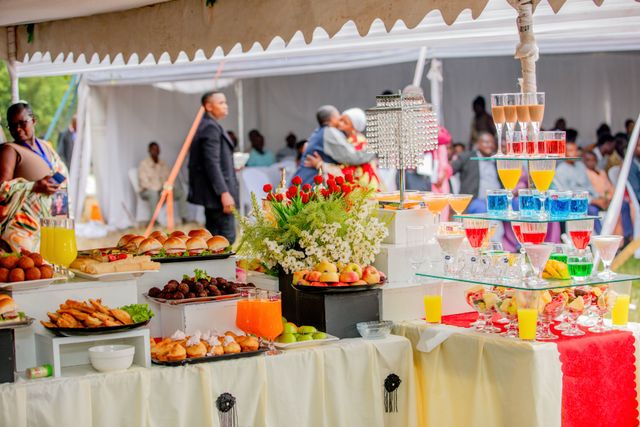
To secure the right caterer, start your search 9-12 months before your wedding date, especially during peak seasons when popular vendors book quickly. Early booking gives you access to first-choice caterers and allows sufficient time for menu development, tastings, and logistics coordination without pressure.
When to Book Your Caterer
Start learning about options at least 12 months out, then secure your caterer no later than 9-12 months before the event. This timeline will give you availability and positions the caterer as part of your broader planning team. Destination weddings or large celebrations make earlier booking important.
Conducting Food Tastings
You should schedule tastings 4-6 months before your wedding and limit attendance to 2-4 people whose opinions matter. Taste dishes you intend to serve, not just the kitchen’s standard offerings, and review at least one dish cold or reheated since wedding food sits in warmers. The tasting chef should lead your event kitchen, so ask who cooks on the day.
Checking Service Quality and Staff Ratio
Plated dinners require 1 server per 10-12 guests, while buffets need 1 server per 20 guests. Bars need 1 bartender per 50 guests for simple service. The caterer should provide trained, well-dressed staff who understand table etiquette and timing management.
Verifying Hygiene and Food Safety Standards
Foodborne illnesses affect 866 million people annually, making hygiene verification non-negotiable. You need to ask about ingredient freshness, food storage and transport methods, hygiene protocols, and cleanliness maintenance at live counters. The caterer should provide proof of current food handler permits and general liability insurance.
Questions to Ask Before Signing the Contract
You should confirm availability for your date, experience at your venue, licensing and insurance coverage, service style capabilities, and whether your wedding is their only event that day. The package should be clear about what it includes regarding setup, serving, breakdown, staff provision, and equipment requirements. Get itemised pricing with payment schedules, final guest count deadlines, and cancellation policies in writing.
Step 4: Planning Menus and Managing Day-of Execution
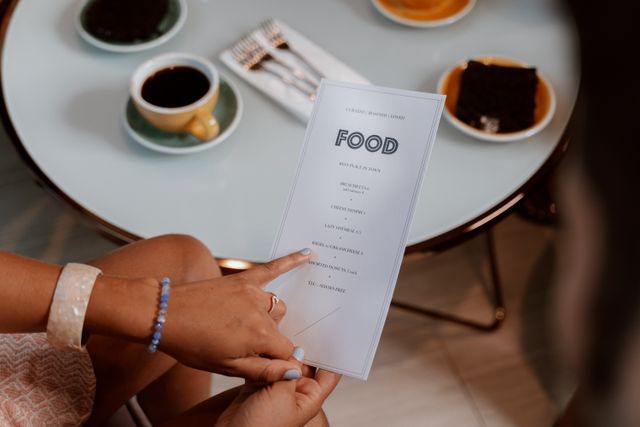
Menu planning transforms from concept to reality during this phase of Bangalore wedding planning. Each function needs its own culinary identity rather than repetition.
Menu Planning Based on Function Type
Every wedding function carries a distinct personality that requires thoughtful menu design. Welcome drinks introduce guests through comforting regional cuisine or interactive live stations. Mehendi functions suit colourful street food counters, fresh juices, chaats and wraps, with live stations like pasta or mocktail bars keeping guests entertained.
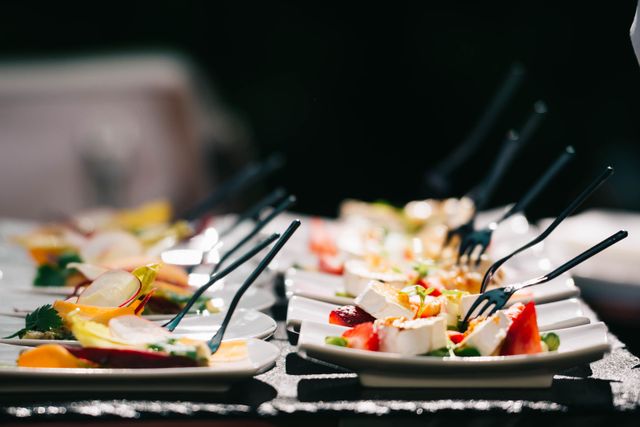
Haldi ceremonies held during daytime work best with wholesome light meals that include seasonal fruits, fresh salads and traditional breakfast items. Sangeet presents the chance for gourmet appetisers, global cuisine and signature cocktails where finger foods allow guests to enjoy performances without interruption.
The main wedding feast showcases premium dishes, live counters and regional specialties as the culmination of multi-day planning. Rotate cuisines between North Indian, South Indian, Italian and Asian whilst changing cooking styles and presentation. Introduce different dessert selections each day with seasonal ingredients for freshness.
Arranging Buffet Stations to Avoid Queues
Single buffet tables serving large groups create the most common queue problem. Double-sided buffet tables or identical stations in separate areas work better. Buffet tables should sit away from walls so guests can access them from all venue parts. Stagger table release times with clear signage to prevent clustering.
Salads and less expensive items should come first since guests take larger portions of earlier foods. More expensive foods like beef and fish work better toward the end, when guests serve smaller amounts. Cutlery belongs at the line end or on tables themselves rather than at the start. All dishes need labels with large, readable fonts that note allergens and main ingredients. Multiple serving utensils should be available for large bowls and napkins at both the beginning and end.
Coordinating Food Timing with Wedding Rituals
Food timing shapes how guests experience the entire reception. The first food offering should arrive within 30 to 60 minutes of guest arrival. Canapés should begin circulating within 10 to 15 minutes of guests reaching the reception space. Receptions with full seated meals need 4 to 6 canapé pieces per person. Lighter main meals or later dinner service work better with 6 to 8 pieces per person.
Food service should arrange with toasts, first dances and cake cutting. If speeches run too long before the meal, food quality suffers whilst dishes wait. Confirm start time for each course so chefs prepare food at its best. Plated dinners require more time because each course needs delivery and clearing. Buffets move faster but require staging so guests aren’t dismissed at once.
Managing Special Dietary Requirements
RSVP cards should include a line stating “Dietary needs or allergies” where guests can specify requirements. Your wedding website’s RSVP form with a text field captures more detail than printed cards. A deadline for dietary information should match your caterer’s final count deadline, usually 7 to 14 days before the wedding. Severe allergies need direct follow-up since conversations provide more context than one-line notes.
The core menu should be designed with inclusivity in mind. A roasted vegetable medley with olive oil and herbs is vegan, gluten-free and dairy-free at once. At least one substantial plant-based option that isn’t a side salad but a real entree vegetarian guests would be excited to eat, such as stuffed peppers or mushroom risotto, should be available. Sauces and dressings work better on the side when possible since many restrictions stem from sauce rather than main ingredient.
Final Week Vendor Coordination
Reconfirm details with all vendors and venue staff one week before. Give your venue and caterer the final guest count by their required deadline, otherwise you may pay for the original higher number quoted. Inform your caterer how many vendor meals you’ll need and ask vendors about special dietary requirements. Finalise the wedding timeline with vendors and wedding party, then distribute copies. Confirm dates, times, locations and services with your venue and vendor team. Determine the number of staff required based on service style and guest count. Walk the venue with the coordinator to confirm where counters stand, prep areas and guest queuing.
Key Takeaways
Planning wedding catering in Bangalore requires strategic preparation across budgeting, vendor selection, and execution. Here’s what you need to know to ensure your guests enjoy exceptional food without operational hiccups:
- Book your caterer 9-12 months in advance to secure first-choice vendors during peak seasons and allow sufficient time for menu development and tastings.
- Budget ₹800-₹3,500 per plate for Bangalore wedding catering, with most couples spending ₹1,200-₹2,000 per guest for multi-cuisine menus that typically account for 25-35% of total wedding spend.
- Follow the 70-30 menu rule by offering 70% familiar comfort food paired with 30% exotic dishes to prevent menu fatigue whilst adding memorable variety.
- Prevent buffet queues strategically by using double-sided tables, creating identical stations in separate areas, and staggering table release times with clear signage.
- Coordinate food timing with rituals by serving first offerings within 30-60 minutes of arrival and aligning courses with toasts, dances, and cultural traditions to maintain quality.
- Verify hygiene standards rigorously by checking ingredient freshness, storage methods, food handler permits, and insurance coverage—foodborne illness affects 48 million people annually.
The success of your wedding catering hinges on early planning, clear communication with vendors, and attention to guest experience. By following these evidence-based steps, you’ll create a dining experience that becomes one of the most celebrated aspects of your Bangalore wedding celebration.
Conclusion
You now have everything you need to plan flawless wedding catering in Bangalore. Understanding catering formats and managing day-of execution through these steps will ensure your guests enjoy memorable food without any hiccups. Start your caterer search early, taste the actual menu dishes, and plan distinct menus for each function. Focus on guest flow and dietary needs while coordinating with vendors. Follow this guide, and your catering will be one of the most appreciated parts of your celebration.
FAQs
Q1. What is the typical cost per plate for wedding catering in Bangalore?
Wedding catering in Bangalore typically costs between ₹800 to ₹3,500 per plate, with most couples spending ₹1,200 to ₹2,000 per guest for multi-cuisine menus. Non-vegetarian options generally increase costs by ₹300 to ₹800 per plate due to ingredient prices and handling requirements. Catering usually accounts for 25 to 35 percent of the total wedding budget when venue and catering are booked separately.
Q2. How far in advance should I book my wedding caterer?
You should begin exploring catering options at least 12 months before your wedding date and secure your caterer no later than 9-12 months in advance. This timeline is particularly important during peak wedding seasons when popular vendors book quickly. Early booking ensures you get your first-choice caterer and allows sufficient time for menu development, tastings, and logistics coordination without pressure.
Q3. What are the different catering styles available for weddings in Bangalore?
Bangalore offers several catering formats, including traditional South Indian meals served on banana leaves, buffet-style service that allows guests to choose their portions, live food counters with interactive stations like dosa and chaat counters, and multi-cuisine catering that blends different culinary traditions. Each format serves different needs, from honouring cultural traditions to creating engaging dining experiences for guests.
Q4. How many service staff are needed for wedding catering?
The staff-to-guest ratio depends on your service style. For plated dinners, you need 1 server per 10-12 guests, whilst buffet service requires 1 server per 20 guests. For bar service, maintain 1 bartender per 50 guests for simple drink service. Ensuring adequate staffing is essential for smooth service and guest satisfaction throughout your wedding.
Q5. When should food service begin at a wedding reception?
Food service should begin within 30 to 60 minutes of guest arrival at the reception. Canapés should start circulating within 10 to 15 minutes of guests reaching the reception space. For receptions with full seated meals, provide 4 to 6 canapé pieces per person, whilst lighter meals or later dinner service requires 6 to 8 pieces per person to keep guests satisfied.