Your wedding catering menu in Bangalore can become the detail guests remember long after the ceremony ends. Can it honour family traditions without feeling predictable? Balance is the answer. Keep the dishes that make the celebration feel like yours and add contemporary choices that guests will enjoy.
At the time you compare wedding catering services in Bangalore with prices, note that catering typically accounts for 20-30% of a wedding budget. A thoughtful wedding catering in Bangalore plan should account for each function, the venue, guest flow, and dietary priorities. This piece will help you find the best wedding catering in Bangalore and select services that combine heritage with fresh flavours.
Step 1: Choose the Traditional Dishes Your Menu Should Keep
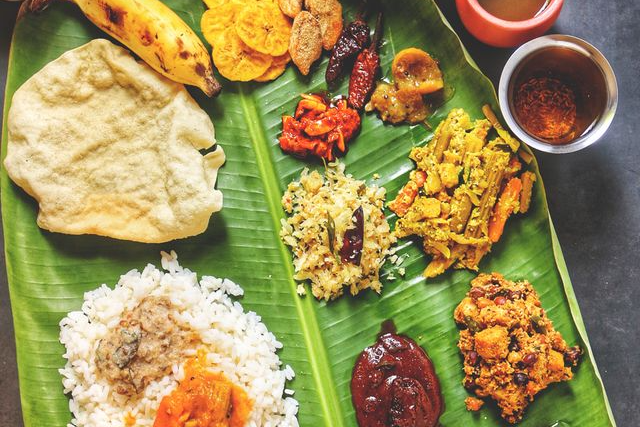
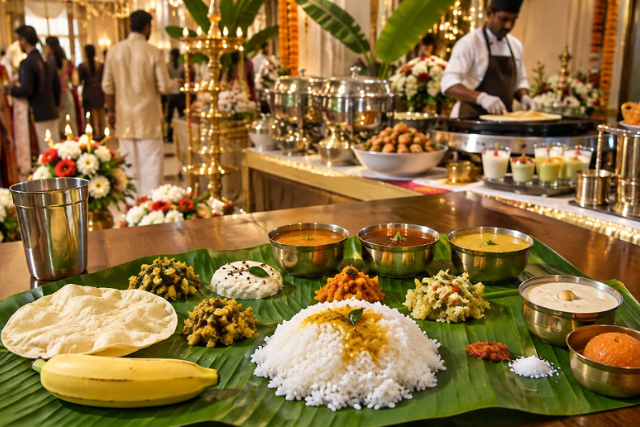
Start with dishes your family would recognise at once. Ask family members which meal, sweet, rice dish, or serving holds meaning. Bangalore families may prefer a Karnataka-style banana-leaf lunch with kosambari, sambar, rasam, a vegetable preparation, rice, and payasam. Others may choose Tamil, Telugu, Kerala, Gujarati, or North Indian family dishes.
Choose two heritage anchors instead of including every regional favourite. A traditional breakfast might feature idli, vada, pongal, and coffee. At a wedding lunch, keep the signature sweet, rice variety, and main accompaniments your family expects. Give a grandmother’s curry or the couple’s favourite dessert a place on the menu if it matters to them.
Test every choice against your guest list. Add dietary questions to the RSVP and ask for clear details, such as vegetarian, vegan, Jain, gluten-free, dairy-free, halal, or a specific allergy. Jain food may exclude onion, garlic, and root vegetables, while vegan dishes do not include dairy, ghee, or paneer. Give the kitchen each guest’s name, table, and agreed meal.
The best wedding catering in Bangalore keeps familiar food at the foundation and pairs it with complementary dishes. Review wedding catering services in Bangalore with prices and ask whether they include banana-leaf service, separate preparation, and clear labels.
Step 2: Give Each Wedding Function Its Own Menu
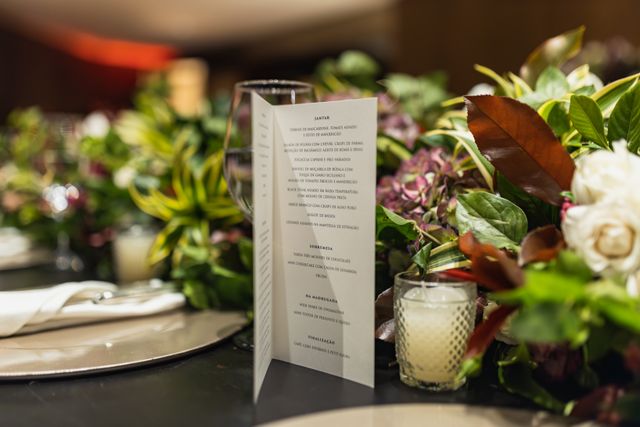
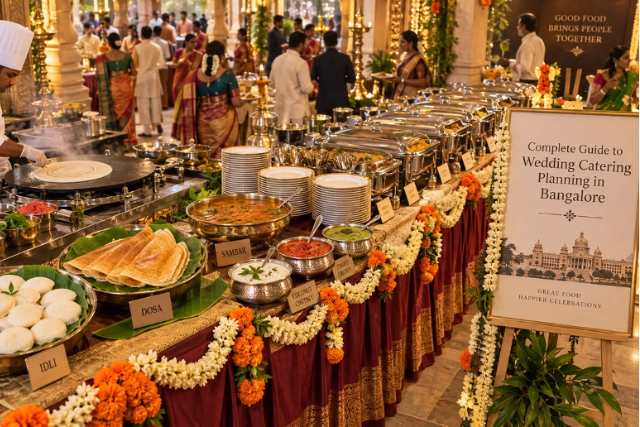
Plan each function around its timing, guests’ energy levels and movement. A morning muhurtham calls for light food that can be served quickly, such as idli, medu vada, pongal or a live dosa counter, with philtre coffee afterward. Keep ready-to-serve items near made-to-order stations so guests do not all end up in one queue.
Daytime meals should give the heritage dishes chosen in Step 1 room to lead. A banana-leaf service can include rice, sambar, rasam, vegetable dishes and payasam. Evening receptions, by contrast, can feature a buffet with starters, a regional corner, a North Indian gravy and a modern counter. This keeps each function from feeling repetitive.
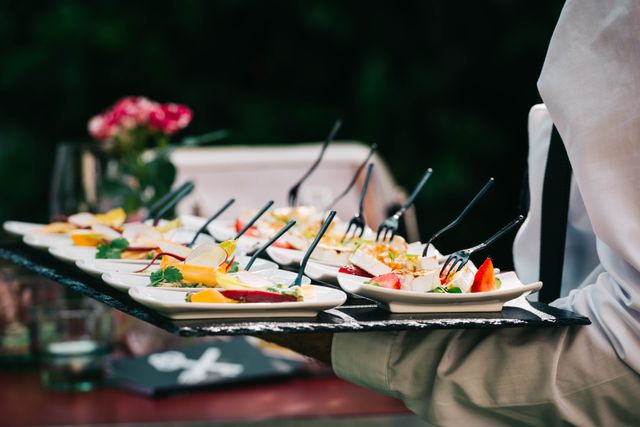
Mehendi or sangeet events suit shareable snacks and drinks. Chaat, kebab-style skewers, mini pizzas and mocktails work during mingling. Offer a late-night philtre coffee, tea or comfort-food station if the programme runs long.
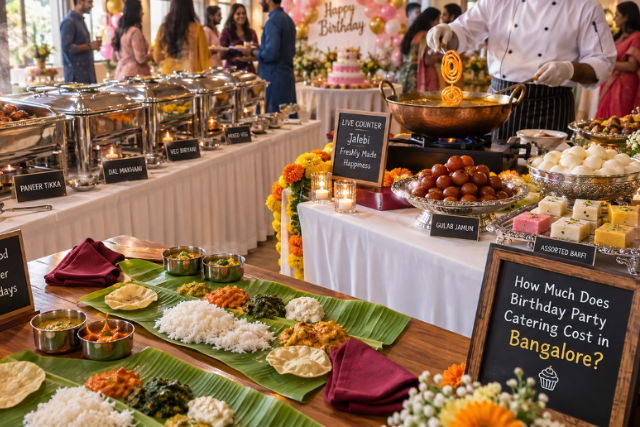
Limit interactive options to what the venue can handle. Two or three properly staffed counters suit a medium-sized reception better than several slow stations. Keep them separate from the buffet, with enough room for queues and equipment.
Compare wedding catering in Bangalore and request separate estimates from wedding catering services in Bangalore for each function.
Step 3: Make the Menu Work Within Your Budget and Venue

Set a firm catering allowance after selecting the menu for each function. Prioritise heritage dishes and service, then price optional additions separately. A seated banana-leaf meal usually costs ₹50–₹100 per plate more than a buffet because servers make repeated rounds.
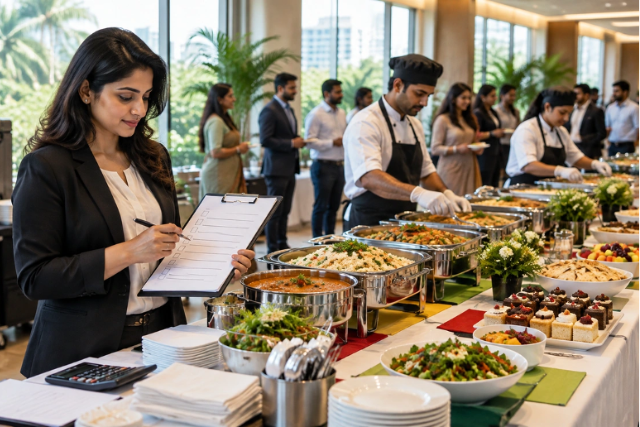
Send every shortlisted wedding caterer in Bangalore the same brief: guest count, function timings, menu, service format and venue details. Ask for a written breakdown of food, staff, transport, crockery, counters, setup, cleanup, taxes and minimum-order requirements. This lets you compare wedding catering services in Bangalore with prices instead of relying only on the per-plate figure.
Visit the venue with the catering team and request a layout that shows service access, kitchen facilities, power, water, refrigeration and buffet space. A 500-guest seated dining setup needs approximately 10,120 square feet for tables, the stage, four food counters and guest movement.
Place mains across two or more available lines. Keep desserts and made-to-order food in separate areas. This supports guest movement and keeps wait times close to eight to ten minutes.
Assess key dishes at the tasting and ask how the team will maintain food temperature and quality during large-scale service. Record inclusions, timings and the final guest-count deadline in writing.
Key Takeaways
A memorable Bangalore wedding menu combines meaningful family traditions with practical, guest-friendly contemporary choices.
- Keep two or three heritage dishes that matter most, then build around them rather than including every regional favourite.
- Plan distinct menus for each function: light breakfasts, traditional banana-leaf lunches and contemporary reception counters prevent repetition.
- Collect dietary requirements through RSVPs, label dishes clearly and arrange separate preparation for vegan, Jain, halal and allergy-safe meals.
- Compare caterers using identical guest counts, menus and service requirements; check written costs beyond the per-plate price.
- Match counters and service style to venue capacity: use two or three well-staffed stations, separate queues and test food quality at a full tasting.
Conclusion
Your wedding menu should feel personal and practical, with generous service at every function. Keep the heritage dishes that matter most to your families, then add contemporary options that suit your guests and venue. Clear dietary planning and sensible counter choices, supported by a detailed written quote, will help you serve Bangalore guests with ease. Choose quality over excess, and your celebration will be remembered for food that truly felt like yours.
FAQs
Q1. How can we personalise our wedding catering menu?
Start with two meaningful family or regional favourites, then add contemporary dishes your guests will enjoy. Check dietary requirements through your RSVPs before finalising the menu.
Q2. How should we plan food for different wedding functions?
Offer familiar breakfast dishes for the morning ceremony, a traditional banana-leaf lunch and a reception buffet with selected modern options. Vary snacks, drinks and desserts to avoid repetition.
Q3. What should we check before finalising a catering menu?
Taste the key dishes, confirm dietary arrangements and check that the venue can support your service style. Get written details of staffing, timings, equipment and food-temperature controls.
Q4. How can we keep catering costs manageable for 100 wedding guests?
Prioritise essential dishes and service, with optional extras priced separately. Compare quotes for the same menu and guest count, and consider a buffet: seated banana-leaf service usually costs ₹50–₹100 more per plate.
Q5. How many live food counters should we include at the reception?
Two or three well-staffed counters can suit a medium-sized reception. Match the number to your venue’s space and keep them separate from the main buffet to reduce queues.